
Niš
Niš stands on the Nišava River. Known as Naissus in Roman times, the city is associated with the birth of Constantine the Great. The surviving Ottoman fortress is a starting point for exploring the city’s later history.
From Naissus to Niš
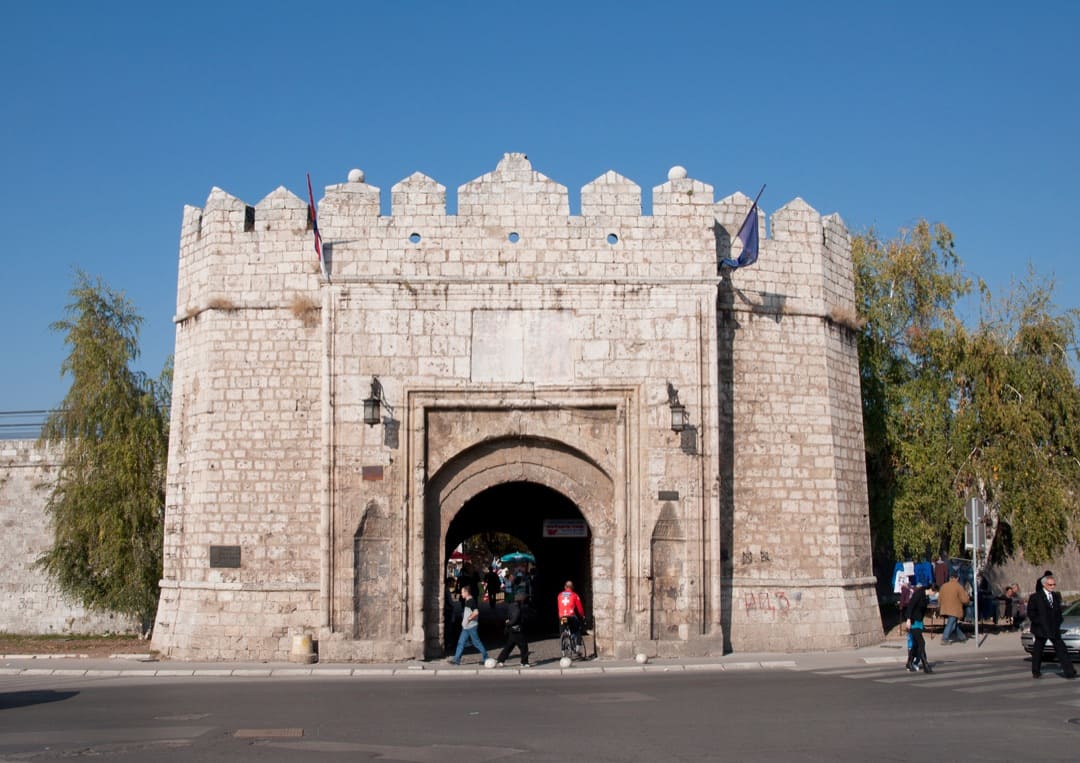
The Nišava valley carried routes through the central Balkans. Roman Naissus is associated with the birth of Constantine the Great. The nearby archaeological park of Mediana preserves remains from the late Roman period. In the city centre, the surviving Ottoman fortress belongs to a much later chapter, with its present walls built in 1719–1723.
Roman heritage and the fortress
At Mediana, the remains of a residential complex and its mosaics show the scale of late Roman building. In town, approach the fortress from the river to see Stambol Gate and the extent of the Ottoman defenses.
Monuments and places of memory
Skull Tower was erected by Ottoman authorities after the Battle of Čegar in 1809. The former Crveni Krst camp and Bubanj memorial address another period of violence, the German occupation during the Second World War. Read each site in its own historical context.
People of Niš
Constantine connects the city with late antiquity. Stevan Sinđelić is remembered for his role in the Battle of Čegar. The National Museum also keeps a literary exhibition on writer Stevan Sremac and poet Branko Miljković, opening a different chapter in the cultural history of Niš.
A visit in stages
Start at the fortress by the Nišava. Set aside time for Mediana and Skull Tower away from the central walk. The former camp and Bubanj can form a separate visit focused on wartime history.